Reference article
Cabin AC Comfort: Climate System Vocabulary for Family Passengers
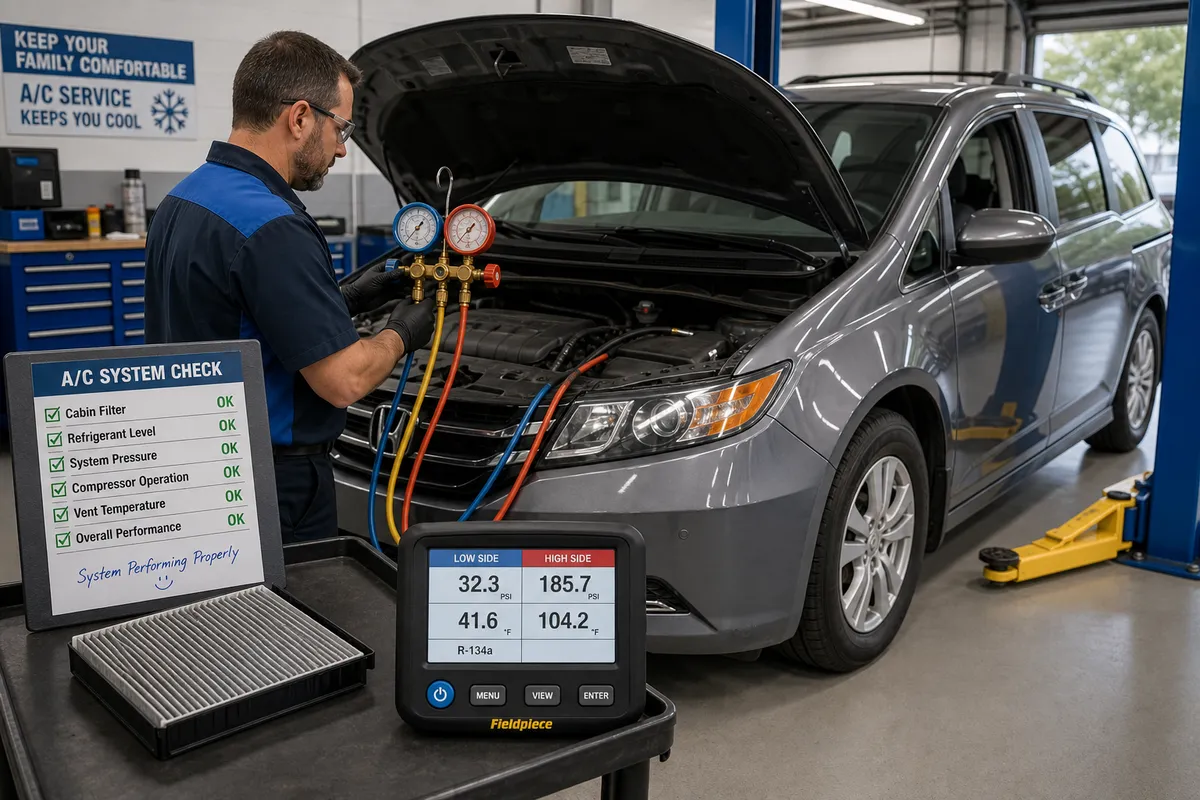
Educational guide to reading HVAC inspection notes, cabin filter records, and airflow terminology before summer family travel with children and seniors aboard.
Why cabin climate matters on long family routes
Passenger comfort affects alertness, hydration needs, and rest stop planning. Children and older adults may be more sensitive to temperature swings and airflow patterns. Educational modules on eurybathicq.info explain how HVAC inspection reports document system performance without promising specific cooling outcomes.
Cabin climate checks are one layer of pre-trip preparation alongside mechanical safety reviews. A comfortable interior supports focused driving; it does not replace brake, tire, or restraint system inspection.
Common HVAC inspection report fields
Shop reports and service logs reuse technical terms. Neutral definitions reduce confusion during pre-trip review:
- Vent temperature differential: Temperature reading at center vents compared to ambient air during system test.
- Refrigerant pressure readings: High and low side values recorded during operational test — interpreted by technician.
- Blower motor speed stages: Whether all fan speeds operate without noise or interruption.
- Cabin filter condition: Visual assessment of filter media — dust loading, moisture, odor notes.
- Condensate drain flow: Whether moisture drains properly from evaporator housing.
- Defrost performance: Windshield clearing observation during mode test.
Cabin filter and air quality documentation
Cabin filters affect airflow volume and particulate reduction. Manufacturer intervals vary by driving environment — urban dust, pollen regions, and desert roads may accelerate filter loading. Educational content explains how to read filter replacement notes in service logs without prescribing intervals without inspection.
Households traveling with allergy-sensitive passengers benefit from understanding filter specification fields — particulate rating, carbon layer presence, OEM part numbers — as document vocabulary rather than product rankings.
Symptoms as observation categories
Drivers and passengers report uneven cooling, musty odors, or fogging windows. Educational modules categorize these neutrally as conversation prompts: odor may relate to evaporator moisture retention; weak airflow may relate to filter restriction or blower issues; cycling compressor behavior may appear in technician notes.
Artificial intelligence tools may draft plain-language summaries of HVAC test data. Our materials clarify that such summaries organize information for study — qualified technicians interpret pressure readings and leak test results.
Regional travel and climate load
Cross-country routes may cross multiple climate zones. Educational content describes how to read shop recommendations about system performance in high ambient temperatures. Modules present questions for technician dialogue rather than directives about refrigerant service.
Financial document vocabulary in HVAC context
Household travel budgets sometimes attach HVAC service to line items labeled 'climate system review' or 'cabin filter replacement.' Educational materials define these fields neutrally as documentation categories used in maintenance planning — not as indicators of repair scope or final cost.
Limitations of educational climate content
Materials on eurybathicq.info do not perform refrigerant recovery, leak detection, or component replacement. They teach reading formats and question framing. Unusual odors accompanied by dizziness, visible smoke, or electrical burning require immediate professional evaluation.
Summary
Cabin AC comfort education for family travel emphasizes HVAC report literacy, filter documentation, and passenger-focused observation categories. Understanding field names supports clearer shop conversations while leaving technical service decisions to licensed facilities.