Reference article
Family Trip Inspection: A Structured Pre-Travel Vehicle Review Without Guesswork

How households interpret multi-point inspection reports, walk-around checklists, and service log fields before loading luggage for a long family journey.
Why pre-trip review differs from daily commuting checks
Daily driving often relies on habit — fuel level, mirror adjustment, child seat position. A long family trip adds sustained highway hours, variable weather, heavier loads, and fewer convenient stops for unexpected service. Educational modules on eurybathicq.info explain how to read pre-trip inspection documents without treating them as automatic repair orders.
A family trip inspection is a structured review at a point in time. It records measurements and observations that help households decide whether to authorize additional shop work before departure. The learning format separates three layers: manufacturer maintenance recommendations, household travel priorities, and actual conditions observed during walk-around checks.
Families benefit from understanding that inspection checklists describe suggested review points, not fixed outcomes. A vehicle may show acceptable tread depth today while a cross-country route with mountain passes requires different conversation topics with a technician than a flat regional drive.
Document fields common on multi-point inspection reports
Licensed facilities typically document pre-trip reviews in standardized fields. Neutral definitions help households compare records across visits:
- Inspection date: Calendar date when the review was performed; anchor for comparing future measurements.
- Odometer reading: Mileage at inspection; used to align with scheduled service intervals.
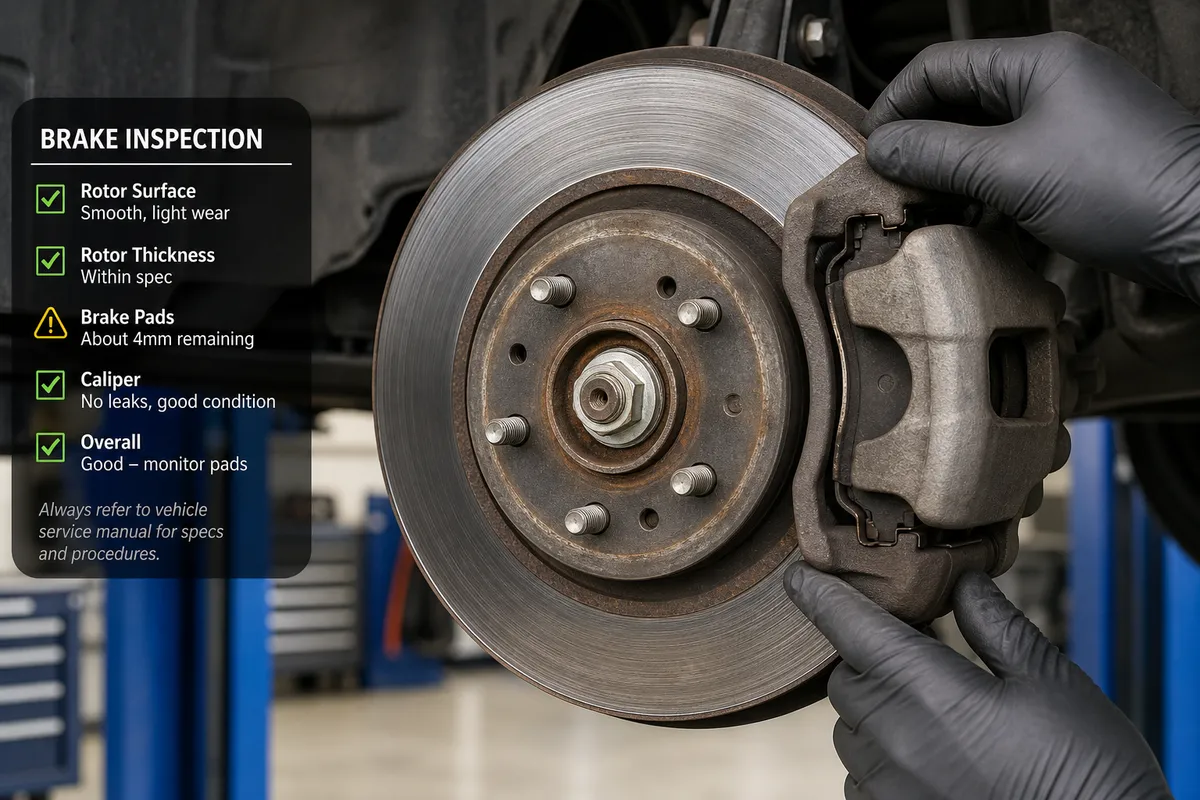
- Brake pad thickness: Remaining friction material measured at inner, center, and outer points on each axle.
- Tire tread depth: Groove depth recorded at multiple points per tire; often noted in 32nds of an inch.
- Fluid condition notes: Observations on color, level, and contamination for oil, coolant, and brake fluid.
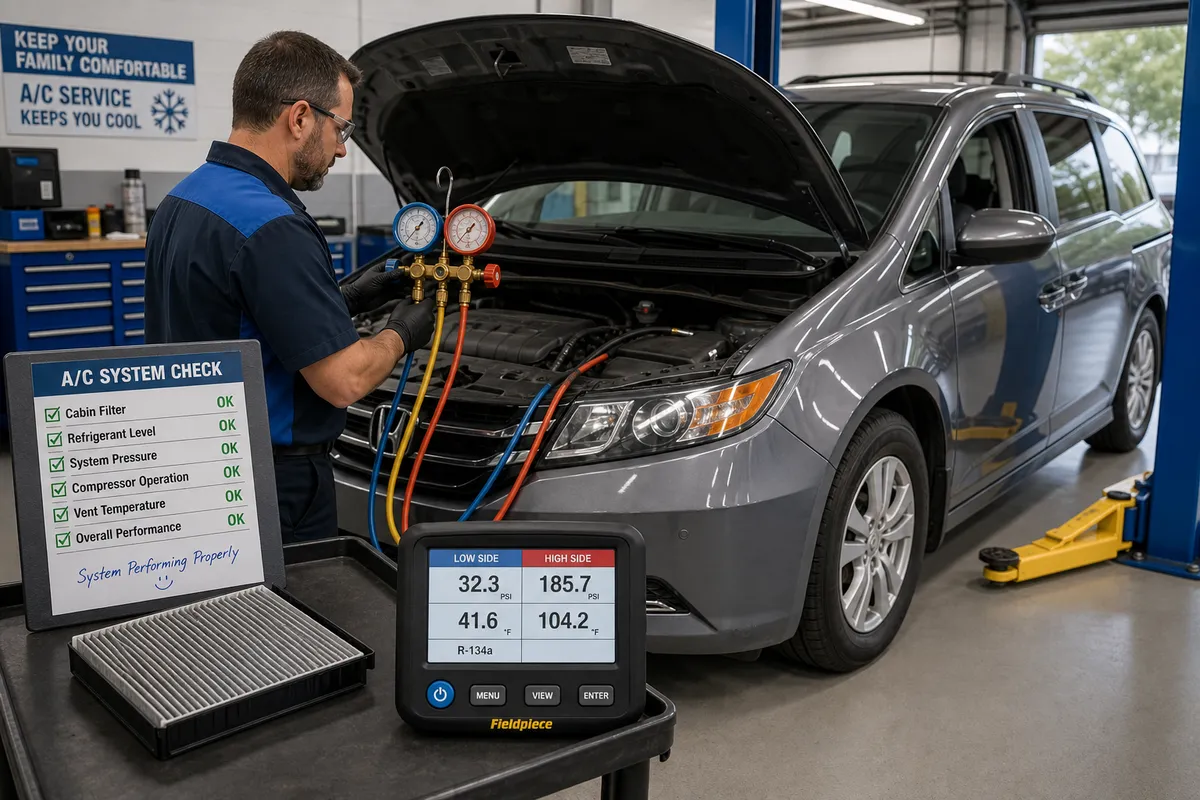
- Battery test result: Load test reading or state-of-charge estimate from shop equipment.
- Technician recommendations: Free-text observations distinguished from measurements in educational modules.
Walk-around categories before loading luggage
Educational workflows recommend documenting exterior and interior observations before reading shop data. Categories include tire sidewall condition, headlight and taillight function, wiper blade edge quality, spare tire or inflation kit status, and child restraint anchor accessibility.
Under-hood review fields — belt tension appearance, hose swelling, battery terminal corrosion — appear on many shop forms. Modules teach how to read these notes alongside manufacturer specification tables without concluding which component requires replacement.
Artificial intelligence tools in some service portals can summarize dense inspection PDFs into plain-language overviews. Our materials explain that such summaries are study aids under human editorial review — manufacturer documents and hands-on technician evaluation remain authoritative.
Aligning trip routes with inspection priorities
Mountain highways, desert heat, and coastal humidity stress different systems. Educational content describes how route planning questions connect to inspection vocabulary: Will the vehicle carry maximum passenger and cargo load? Are overnight temperatures expected below freezing? Will the route include extended idle periods in traffic?
Financial planning vocabulary appears in household travel budgets: line items for scheduled service, tire replacement reserves, and contingency categories for unplanned shop visits. Educational modules define these terms neutrally as document labels used in planning spreadsheets — not predictions of future shop totals.
Safety systems and restraint documentation
Family vehicles require attention to restraint systems, door latch function, and warning indicator status. Inspection reports may note airbag warning lamp behavior, seat belt retraction, and third-row access mechanisms. Educational content explains field names without directing specific repairs.
Modules emphasize that restraint and airbag systems require licensed evaluation when warning lamps remain active. Pre-trip literacy supports informed shop dialogue; it does not replace hands-on diagnosis.
How AI-assisted checklists fit the learning format
Some editorial workflows use artificial intelligence to draft plain-language summaries of dense inspection templates. Human editors verify field names, remove ambiguous phrasing, and add disclaimers that summaries are for orientation only.
Readers should treat AI-generated inspection overviews as study aids alongside primary shop reports. If a summary omits a footnote about all-wheel-drive fluid on a specific model, the technician's original document remains the reference.
Connecting inspection literacy to shop conversations
When a vehicle arrives at a licensed facility before a trip, households who understand inspection vocabulary can ask clearer questions: Were measurements compared to manufacturer specification? Were additional observations noted beyond the authorized scope? Which items are monitoring recommendations versus immediate review categories?
Educational materials emphasize that approving service is a separate decision from understanding what the documents mean. Inspection literacy reduces miscommunication; it does not replace technician judgment on the shop floor.
Summary
Family trip inspection education focuses on reading multi-point reports, walk-around categories, and planning documents with neutral definitions. The learning format connects route realities to documentation practices, introduces financial planning vocabulary without outcome claims, and explains where digital tools — including AI-assisted summaries — fit within human-reviewed editorial workflows.